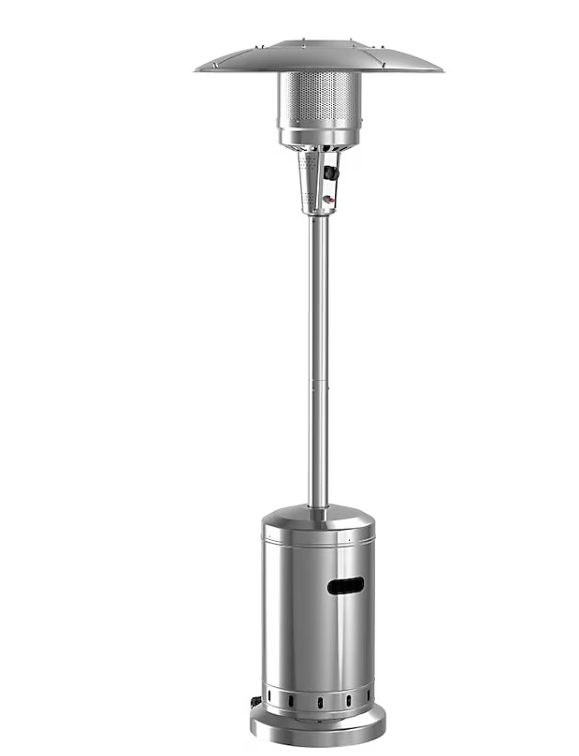
Style Selections 48000 -BTU Silver Stainless steel Floorstanding Liquid propane Patio Heater
- 48,000 BTU adjustable heating output
- Heat-treated and rust-resistant stainless steel construction
- 20-Lb propane tank required (sold separately)
- Stainless steel burner with electronic ignition…thermocouple safety feature automatically shuts off gas flow
Extending Your Outdoor Season Without Breaking the Bank
There’s something magical about outdoor gatherings that just can’t be replicated indoors. The fresh air, the stars overhead, the sense of space and freedom—it all combines to create memories that last a lifetime. But as the sun dips below the horizon and temperatures start to drop, even the most dedicated outdoor enthusiasts begin to shiver and glance longingly toward the warmth of the indoors.
What if you could extend those perfect outdoor moments well into the cooler months? What if the crisp fall evening or early spring gathering didn’t have to end when goosebumps appeared? Enter the Style Selections Gas Patio Heater—a game-changer for anyone who refuses to let Mother Nature dictate their outdoor entertainment schedule.
I discovered this outdoor heating solution last year when planning my sister’s October engagement party. We wanted an outdoor celebration, but the evening forecast looked chilly. After extensive research and comparing countless options, I took a chance on the Style Selections model. Fast forward to the party: guests mingled comfortably outside until well past midnight, with many commenting they’d forgotten it was even cold that night!
This comprehensive guide will walk you through everything you need to know about the Style Selections Gas Patio Heater—from what it is and how it works to maintenance tips and real-world performance reviews. By the time you finish reading, you’ll understand why these heaters have become the not-so-secret weapon of year-round outdoor enthusiasts.
What Exactly Is the Style Selections Gas Patio Heater?
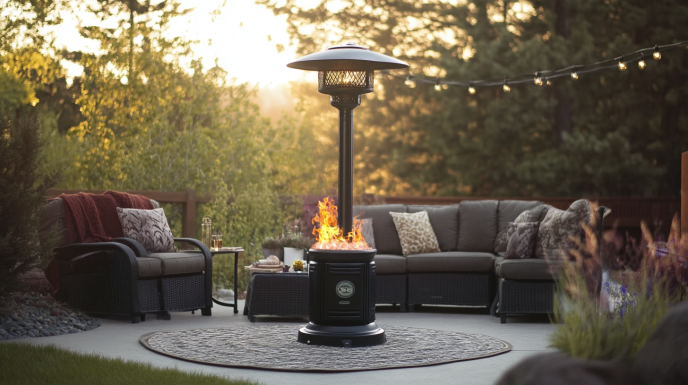
The Style Selections Gas Patio Heater is a free-standing outdoor heating appliance designed to warm surrounding areas through radiant heat. Picture an elegant, tall structure resembling a stylish lamp post that emanates warmth instead of light (though many models include ambient lighting features as well).
Standing approximately 87 inches tall (about 7.25 feet), these heaters feature a wide reflector dome at the top, a slender center pole housing the heating elements and gas line, and a sturdy base that accommodates the propane tank. The sleek design comes in various finishes—stainless steel, hammered bronze, and matte black being the most popular options—allowing it to complement virtually any outdoor décor style from modern minimalist to rustic farmhouse.
What sets the Style Selections brand apart from competitors is their attention to both aesthetic appeal and functional durability. These aren’t the industrial-looking heaters you might see at commercial establishments; they’re designed specifically for residential use with a focus on blending into your carefully curated outdoor living space while providing substantial heat output.
Most models feature wheels for easy mobility, variable heat settings, and an anti-tilt safety mechanism—practical features that enhance both usability and safety. The typical heat output ranges from 40,000 to 48,000 BTUs (British Thermal Units), making them considerably more powerful than many competing brands in the same price range.
The Science Behind the Warmth: How Does It Actually Work?
Understanding how your patio heater functions helps you operate it more efficiently and troubleshoot any issues that might arise. The Style Selections Gas Patio Heater works on a surprisingly simple principle that delivers impressive results.
At its core, the heater operates through a process called radiant heating. Unlike convection heating (which warms the air), radiant heat travels in a straight line from the source and warms objects and people directly—similar to how the sun warms your skin on a cool day even when the air temperature remains low.
Here’s the step-by-step process:
- Propane gas flows from the tank up through the center column to the burner assembly at the top.
- The gas is ignited via a piezo ignition system (that clicking sound when you start it) or electronic ignition on premium models.
- The flame heats a metal emitter screen or grid located beneath the reflector dome.
- The heated emitter produces infrared radiation (heat) that travels downward and outward.
- The dome-shaped reflector at the top directs this heat downward in a circular pattern around the heater.
The beauty of radiant heating is that it doesn’t try to heat the air itself (which would be largely ineffective outdoors), but instead directly warms people and objects in its path. This makes it incredibly efficient for outdoor use where traditional heating methods would quite literally disappear into thin air.
The design is ingeniously efficient: the tallness of the unit allows the heat to spread over a wider area from above, much like a shower head distributes water. By positioning the heat source high and using the reflector dome, the warmth cascades downward to create a comfortable zone of heat that can extend in a radius of up to 9-10 feet depending on ambient conditions.
Tracking Down Your Perfect Heater: Where to Buy
Style Selections is a private label brand primarily sold through Lowe’s Home Improvement stores, making these retailers the most reliable source for purchasing these particular gas patio heaters. You’ll find them both in physical Lowe’s locations and on their website, typically in the outdoor living or seasonal departments depending on the time of year.
During peak seasons (early spring and fall), Lowe’s often features these heaters prominently in their outdoor displays, allowing you to see them assembled and get a feel for their size and aesthetic appeal. The advantage of purchasing in-store is the ability to inspect the unit personally and sometimes negotiate delivery assistance for this bulky item.
If convenience is your priority, the online Lowe’s marketplace offers the complete range of Style Selections heaters, often with more color and style options than individual stores might stock. Online purchases typically include the option for home delivery or store pickup, though delivery fees may apply given the size and weight of these units.
Occasionally, you may find Style Selections heaters through third-party sellers on platforms like Amazon, eBay, or Wayfair, particularly during off-seasons when retailers are clearing inventory. However, purchasing through authorized retailers ensures you receive the full manufacturer’s warranty and support.
Pro tip: Keep an eye out for seasonal sales. Patio heaters often see significant discounts during end-of-season clearances (late fall) or pre-season sales (late winter). I’ve seen price reductions of 25-40% during these periods, making patience a potentially valuable virtue if you’re not in immediate need.
Investment Considerations: Pricing and Value
The Style Selections Gas Patio Heater represents a mid-range option in the outdoor heating market, offering a compelling balance of quality, features, and affordability. Current pricing typically ranges from $149 to $299, depending on the specific model, finish, and any additional features like LED lighting or upgraded ignition systems.
The standard stainless steel model usually hovers around the $179-$199 mark, while premium finishes like hammered bronze or matte black might command an additional $30-$50. Models with enhanced features such as electronic ignition (rather than manual), LED table lighting, or larger heat output ratings naturally fall toward the higher end of the price spectrum.
When considering the value proposition, it’s worth noting that comparable heaters from premium brands like Fire Sense or Hampton Bay often cost $50-$100 more without necessarily offering superior heat output or durability. Conversely, budget brands available at big box stores might save you $50-$75 upfront but typically compromise on heat output, stability, or weather resistance.
The true value assessment should consider not just the initial purchase price but also:
- Heat output (BTUs)
- Construction quality (thickness of metal, quality of finish)
- Stability features (weight of base, anti-tilt mechanism)
- Mobility features (wheel design, ease of movement)
- Warranty coverage (typically 1-year limited for Style Selections)
- Availability of replacement parts
From my experience and research comparing dozens of models, the Style Selections line hits a sweet spot where meaningful quality improvements over budget models are offered without the premium pricing of high-end brands. Their 46,000 BTU standard model delivers heat output comparable to units costing nearly twice as much.
Fueling Your Outdoor Comfort: Propane Basics
Style Selections Gas Patio Heaters exclusively use propane as their fuel source, specifically the standard 20-pound propane tanks commonly used for gas grills. This universal compatibility is intentional and convenient—the same tank powering your BBQ can be swapped into your heater when needed.
The propane tank sits concealed in the base of the unit, secured by a restraining bracket or strap depending on the specific model. A flexible gas line connects the tank to the control valve and burner assembly. Most models feature an easy-access door on the base housing for quick tank replacement.
One common question: Do Style Selections heaters come with a propane tank? The answer is no—like most gas appliances, you’ll need to purchase or exchange a propane tank separately. These tanks are widely available at hardware stores, home improvement centers, gas stations, and many grocery stores, typically costing $40-$60 for a new tank or $15-$25 for an exchange of an empty tank.
A full 20-pound propane tank contains approximately 4.7 gallons of liquid propane. At maximum output (usually around 46,000 BTUs), a Style Selections heater will consume roughly one pound of propane per hour. This translates to approximately 18-20 hours of continuous operation at maximum heat from a full tank. Using lower heat settings naturally extends this duration, with medium settings potentially doubling the run time.
For perspective, if you’re hosting weekend gatherings and using the heater for 4-5 hours each Saturday evening at medium-high settings, a single tank might last nearly a month. This makes the operational cost quite reasonable—approximately $0.75-$1.25 per hour of use depending on local propane prices.
I’ve found that keeping a spare propane tank on hand is a wise investment. Nothing ends an outdoor gathering faster than running out of heat on a chilly evening, and having a backup ensures your comfort never has to be compromised.
From Box to Warmth: Assembly Process
If you’re considering a Style Selections Gas Patio Heater, you should know that some assembly is required—but don’t let that deter you. The process is straightforward, requiring basic tools and moderate mechanical aptitude. Most users complete assembly in 45-90 minutes depending on experience level.
The heater arrives in a large box containing several main components: the dome reflector, burner assembly, center pole sections, control housing, and base. Also included are hardware packages, a user manual, and assembly instructions with diagrams.
Here’s a simplified overview of the assembly process:
- Unpack all components and verify all parts are present using the included checklist
- Assemble the base, which typically includes attaching wheels and stabilizer components
- Connect the center pole sections to the base
- Attach the control housing to the center pole
- Connect the gas line through the pole from the control housing to the burner assembly
- Attach the burner assembly to the top of the center pole
- Install the dome reflector (this often requires assembling the reflector pieces first)
- Connect the propane tank and perform leak testing as directed in the manual
Tools typically required include an adjustable wrench, Phillips screwdriver, and potentially a ladder for comfortably reaching the top components during assembly. Some models include basic tools in the package, though these are often of minimal quality.
My personal experience with assembly was mostly positive, though I encountered two minor challenges: some pre-drilled holes didn’t perfectly align (requiring slight pressure to connect components), and the instructions occasionally lacked clarity regarding the orientation of certain parts. These issues were easily overcome with a bit of patience and common sense.
Pro tip: I strongly recommend assembling the unit with a helper. While it’s technically possible to complete assembly solo, having someone to hold components steady—particularly when connecting the upper sections—makes the process significantly easier and reduces the risk of damaging components.
Coverage Area: How Much Space Can It Heat?
Understanding the effective heating range of your patio heater helps set realistic expectations and determines optimal placement for maximum comfort. The Style Selections Gas Patio Heater, with its standard output of 46,000 BTUs, creates an effective heating zone of approximately 9-10 feet in diameter under ideal conditions.
However, several factors significantly impact this heating radius:
- Ambient temperature: The colder the surrounding air, the smaller the effective heating zone. A heater that creates a 10-foot comfort zone when it’s 55°F might only maintain comfort within 6-7 feet when temperatures drop to 40°F.
- Wind conditions: Even light breezes of 5-10 mph can dramatically reduce heating effectiveness by dispersing the radiant heat. In windy conditions, the comfort zone might shrink by 30-50%.
- Overhead coverage: Using the heater under a pergola, gazebo, or patio cover (with proper clearance for safety) helps trap heat and expand the effective zone. Just ensure you maintain the required 24-inch clearance from the reflector dome to any overhead surface.
- Heat setting: Most Style Selections models offer variable heat control. At medium settings, expect the heating radius to decrease by roughly 25-30% compared to maximum output.
In my experience using these heaters for various gatherings, I’ve found that for comfortable conversation groups, positioning the heater centrally among 6-8 people works well in moderate conditions (temperatures in the 50s). For colder evenings, reducing to 4-6 people in closer proximity to the heater ensures everyone stays comfortable.
It’s also worth noting that the height of the heater creates uneven heating zones—areas closer to shoulder height receive more warmth than areas near the ground. For maximizing comfort during seated gatherings, consider supplementing with a smaller tabletop heater or positioning the main heater slightly closer to the seating area.
Safety First: Features and Precautions
Safety should always be a primary consideration with any heating appliance, and the Style Selections Gas Patio Heater incorporates several important safety features to prevent accidents and ensure peace of mind.
The most significant safety feature is the anti-tilt switch—a mechanism that automatically shuts off gas flow if the heater tilts beyond a certain angle (typically 15-20 degrees). This prevents fuel from continuing to flow if the unit is accidentally knocked over, significantly reducing fire hazards.
Additional built-in safety features include:
- Oxygen Depletion Sensor (ODS): Monitors oxygen levels and shuts off the heater if they drop below safe thresholds
- Thermocouple safety valve: Cuts gas flow if the flame goes out, preventing unburned gas from accumulating
- Heat-resistant glass or mesh enclosure: Protects against accidental contact with the flame
- Weighted base design: Provides stability even in moderate winds
- Cool-touch components: Many exterior surfaces remain safe to touch even when the heater is operating
Despite these safety measures, users should observe several important precautions:
- Maintain proper clearances: Keep a minimum of 24 inches clearance above the reflector dome and at least 36 inches clearance from all sides to combustible materials.
- Never use indoors: Style Selections Gas Patio Heaters are designed exclusively for outdoor use. Using them in enclosed spaces can lead to carbon monoxide buildup and oxygen depletion.
- Choose appropriate locations: Place on level, non-combustible surfaces away from overhanging trees, structures, or other flammable materials.
- Weather awareness: Store the heater indoors or use a protective cover during severe weather. While designed for outdoor use, extreme conditions can damage components and create safety hazards.
- Children and pet supervision: Establish clear boundaries around the heater, especially when in use, as the center column can become hot during operation.
- Regular leak checks: Before each use season, check all gas connections for leaks using a soapy water solution (bubbles indicate leaks).
I particularly appreciate the thoughtful placement of controls on these units—positioned at a comfortable height and designed with clear indicators that are visible even in low light conditions. The control knobs also require slight pressure while turning, preventing accidental adjustment.
Indoor Use: The Definitive Answer
This question comes up frequently, so let me be absolutely clear: Style Selections Gas Patio Heaters should never be used indoors under any circumstances. This isn’t merely a recommendation—it’s a critical safety rule that could literally save lives.
These heaters are designed exclusively for outdoor use for several important reasons:
- Carbon monoxide production: Gas patio heaters produce carbon monoxide as a byproduct of combustion. Outdoors, this colorless, odorless gas dissipates harmlessly into the atmosphere. Indoors, it can quickly accumulate to dangerous or fatal levels.
- Oxygen consumption: The combustion process consumes oxygen. In confined spaces, this can reduce oxygen levels below what’s necessary for human safety.
- Fire hazards: The high heat output creates significant fire risks in indoor environments where combustible materials are typically much closer than outdoor settings.
- Lack of indoor safety certifications: These heaters aren’t tested or certified for indoor use and lack the safety features required for indoor heating appliances.
Some users mistakenly believe that well-ventilated indoor spaces like garages with open doors might be acceptable. This is not the case. Even spaces like screened porches, garages, tents, or partially enclosed patios may not provide sufficient ventilation to safely operate these heaters.
For indoor heating needs, consider purpose-designed electric space heaters, properly installed gas heaters with appropriate venting, or infrared electric heating panels—all of which are engineered specifically for indoor safety.
The Style Selections owner’s manual explicitly states that indoor use voids the warranty and may violate local fire codes or insurance policies. More importantly, it creates an unacceptable risk to you and your loved ones.
Maintaining Your Investment: Cleaning and Care
Proper maintenance of your Style Selections Gas Patio Heater not only extends its lifespan but also ensures optimal performance and safety. With minimal effort, these heaters can provide reliable service for many seasons.
Regular Cleaning Schedule
After each use:
- Allow the heater to cool completely
- Wipe down exterior surfaces with a soft cloth to remove dust and debris
- Check the burner area for spider webs or insect nests (a common issue that can block gas flow)
Monthly during use season:
- Clean the emitter screen using compressed air or a soft brush to remove accumulated dust
- Inspect gas connections for signs of wear or damage
- Check and tighten any loose screws or fasteners
- Clean the reflector dome to maintain optimal heat reflection (a simple solution of mild soap and water works well)
Seasonal maintenance:
- Conduct a thorough inspection of all components
- Clean burner ports using compressed air or a pipe cleaner
- Check the gas hose for cracks or wear spots
- Verify the pilot light assembly is clean and functional
- Touch up any scratches in the finish to prevent rusting (matching spray paint works well)
Storage Recommendations
When not in use for extended periods, proper storage significantly extends the life of your heater:
- Disconnect and remove the propane tank (never store the heater with the tank attached)
- Cover the burner assembly with aluminum foil or plastic wrap to prevent insects from nesting
- Store in a dry location like a garage or shed, or use a manufacturer-approved weather cover if outdoor storage is necessary
- For long-term storage, consider disassembling the upper components for more compact storage
I’ve found that spending just 10-15 minutes on maintenance after the last use of the season pays dividends in reliability. During my second season of ownership, I neglected this step and discovered the burner ports partially clogged with spider webs the following spring, requiring more extensive cleaning before I could use it again.
When Things Go Wrong: Replacement Parts and Repairs
Even with proper maintenance, components can eventually wear out or become damaged. The good news is that Style Selections Gas Patio Heaters are designed with serviceability in mind, and most common issues can be addressed with readily available replacement parts.
The most frequently replaced components include:
- Ignition assembly: The piezo igniter can wear out after multiple seasons of use
- Gas regulator: Can develop leaks or performance issues over time
- Control knobs: May crack or become difficult to turn
- Wheels: Plastic wheels can crack in extreme weather conditions
- Burner assembly: May eventually show signs of corrosion or metal fatigue
Replacement parts can typically be ordered directly through Lowe’s customer service or through the manufacturer’s website (often BlueRhino or AZ Patio Heaters, depending on the specific model). When ordering parts, have your model number ready—this is usually found on a label on the base of the unit or in your owner’s manual.
For minor repairs like replacing the igniter or control knob, most moderately handy homeowners can complete the job without professional help. The owner’s manual typically includes diagrams and basic repair instructions for common issues.
For more complex problems involving the gas line or burner assembly, consulting with a professional may be advisable. Many grill repair services also work on patio heaters, offering experienced assistance at reasonable rates.
From personal experience, I can share that the most common failure point is the ignition system. After my igniter stopped working during the third season, I found a replacement part online for under $20 and installed it in about 15 minutes following a YouTube tutorial. For those less mechanically inclined, a simple grill lighter works as a temporary solution to light the heater manually using the pilot access hole.
Energy Efficiency: Performance and Consumption
When investing in any heating appliance, understanding its energy efficiency helps predict operating costs and environmental impact. The Style Selections Gas Patio Heater strikes a reasonable balance between heat output and fuel consumption, though “efficiency” in outdoor heating requires a different perspective than indoor appliances.
Standard models produce approximately 46,000 BTUs at maximum output, consuming roughly one pound of propane per hour at this setting. With a typical 20-pound tank providing about 18-20 hours of operation at full power, the operational cost averages around $0.75-$1.25 per hour depending on local propane prices.
Comparing this to electric patio heaters is revealing. While electric models boast nearly 100% efficiency in converting electricity to heat, their typical maximum output of 5,000 BTUs provides significantly less warmth than propane models. A gas patio heater might use more energy overall, but it delivers substantially more usable heat to the target area.
The variable control settings offer meaningful efficiency improvements. Running at medium setting (approximately 30,000 BTUs) can extend operation time by 40-50% while still providing sufficient warmth in milder conditions. I’ve found that starting at high setting to quickly establish a comfort zone, then reducing to medium for maintenance heating, optimizes both comfort and efficiency.
Several practices can further improve efficiency:
- Wind barriers: Strategically placed outdoor screens or landscaping features can block prevailing winds, dramatically improving heat retention.
- Reflective surfaces: Positioning the heater where heat can reflect off walls or other surfaces helps capture and redirect otherwise lost heat.
- Optimal height adjustment: Some models allow height adjustments—lowering the heat source can intensify warming in smaller areas.
- Regular maintenance: Keeping burner ports clean and properly adjusted ensures optimal flame patterns and heat production.
From an environmental perspective, propane is a relatively clean-burning fossil fuel, producing fewer greenhouse gas emissions than many alternatives. However, it’s still a non-renewable resource. For those with strong environmental concerns, electric infrared heaters powered by renewable electricity may offer a greener alternative, albeit with reduced heating capacity.
Warranty Coverage: What’s Protected and What’s Not
Understanding your warranty coverage provides both peace of mind and realistic expectations about manufacturer support. Style Selections Gas Patio Heaters typically come with a one-year limited warranty from the date of purchase, though specific coverage may vary slightly between models.
The standard warranty generally covers:
- Manufacturing defects in materials and workmanship
- Functional components including the burner assembly, gas valves, and regulators
- Structural elements such as the frame, pole, and reflector
However, several important exclusions apply:
- Cosmetic damage including scratches, dents, or discoloration from normal use
- Weather damage from exposure to extreme conditions
- Damage from improper use or failure to follow safety guidelines
- Normal wear and tear on components expected to degrade over time
- Unauthorized modifications or repairs using non-approved parts
To maintain warranty coverage, you must:
- Register your product within 30 days of purchase (typically online or via mail-in card)
- Retain your original receipt as proof of purchase date
- Use the heater in accordance with all instructions in the owner’s manual
- Perform required maintenance as specified in documentation
My experience with warranty service was generally positive when I discovered a manufacturing defect in the control valve of my unit. After submitting photos and a description of the issue through the manufacturer’s website, they shipped a replacement part at no charge within two weeks. Installation was straightforward, though I was responsible for the labor (or would have faced service charges had I opted for professional installation).
It’s worth noting that most retailers, including Lowe’s, offer extended warranty plans at additional cost that can provide coverage for 2-5 years beyond the manufacturer’s warranty. These plans often include additional benefits like in-home service calls or full replacement options, which might be worth considering depending on your planned usage intensity.
Weather Resistance: Standing Up to the Elements
A frequent concern about outdoor appliances is their ability to withstand exposure to various weather conditions. Style Selections Gas Patio Heaters are designed with moderate weather resistance, though they aren’t indestructible and do have limitations.
The standard models feature powder-coated steel or stainless steel construction that provides good resistance to moisture and general weather exposure. The control components and burner assembly include weather-resistant features, though they aren’t fully weatherproof.
In my experience and based on broader user reports, these heaters handle the following conditions reasonably well:
- Rain: Occasional light to moderate rainfall typically doesn’t cause immediate problems, though prolonged exposure should be avoided.
- Humidity: High humidity environments don’t significantly impact performance or durability.
- UV exposure: The powder-coated finish resists fading and degradation from sunlight relatively well, though extremely sunny climates may see faster cosmetic aging.
- Temperature fluctuations: The materials withstand normal seasonal temperature changes without issue.
However, several weather conditions pose significant risks:
- Heavy or driving rain: Can penetrate control components and lead to corrosion or malfunction.
- Strong winds: Most models are stable in winds up to 10-15 mph, but stronger gusts create tip-over hazards despite safety features.
- Snow and ice: Accumulation can damage the reflector dome and potentially block vents or controls.
- Saltwater exposure: Coastal environments accelerate corrosion, even on stainless steel models.
- Freezing temperatures: While not immediately damaging when not in use, moisture trapped in components can expand when frozen, potentially causing damage.
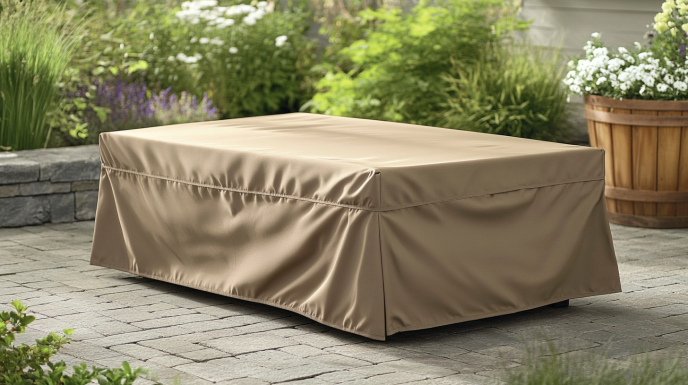
For maximum longevity, I strongly recommend using a weather-resistant cover when the heater isn’t in use. Manufacturer-approved covers cost $25-40 and dramatically extend the appliance’s lifespan. I learned this lesson the hard way after leaving my first heater uncovered through a particularly rainy spring—by fall, I noticed rust forming at several connection points that could have been prevented.
For those in regions with harsh winters or coastal environments, seasonal disassembly and indoor storage of at least the burner components is advisable. The extra 30 minutes of effort each season can add years to your heater’s useful life.
Real-World Performance: User Reviews and Experiences
After three years of personal use and extensive research into other users’ experiences, I’ve compiled insights about how Style Selections Gas Patio Heaters perform in actual everyday scenarios rather than just technical specifications.
The consensus among users is predominantly positive, with most reviews falling in the 4-4.5/5 star range. The most frequently praised aspects include:
- Heat output: Users consistently report being impressed by the effective heating zone, particularly in comparison to electric alternatives.
- Aesthetic appeal: The sleek design and variety of finishes receive high marks for enhancing rather than detracting from outdoor décor.
- Value proposition: The balance of features, quality, and price point is frequently mentioned as exceeding expectations.
- Ease of assembly: Despite requiring some mechanical aptitude, most users report completing assembly without major difficulties.
Common criticisms center around a few specific areas:
- Ignition reliability: The piezo ignition system sometimes fails after 1-2 seasons, requiring replacement or workarounds.
- Wind performance: Effectiveness drops significantly in breezy conditions, a limitation of all free-standing patio heaters.
- Wheel durability: The plastic wheels on some models crack or break when moved frequently across rough surfaces.
- Assembly instructions: Directions are occasionally unclear or lack sufficient detail for certain steps.
From personal experience hosting numerous outdoor gatherings with my Style Selections heater, I’ve found it performs admirably for its intended purpose. On a typical fall evening in the low 50s°F, guests comfortably congregate within 8-9 feet of the heater in light clothing, extending our outdoor entertaining season by several months.
One particularly telling observation: I’ve noticed that at least five friends who experienced the heater at our gatherings subsequently purchased their own models—perhaps the most genuine endorsement possible.
Most impressive is the heater’s longevity when properly maintained. Despite being a mid-priced option, many users report their units remaining fully functional for 5+ years with basic care and occasional part replacement. This translates to an annual cost of $30-$60 for the appliance itself—a remarkable value considering the extended outdoor enjoyment it provides.
Gas vs. Electric: The Heating Showdown
One of the most common questions prospective buyers ask is how gas patio heaters compare to electric alternatives. Having used both types extensively, I can offer a thorough comparison between the Style Selections Gas Patio Heater and typical electric models.
Heat Output and Coverage
- Gas heater advantage: With 40,000+ BTUs, gas heaters produce significantly more heat and cover larger areas (8-10 foot radius vs. 4-6 feet for electric).
- Real-world impact: Gas heaters can warm 6-8 people simultaneously, while electric models typically accommodate 2-4 people within their effective range.
Operational Costs
- Electric advantage for short uses: Electric heaters cost approximately $0.15-$0.30 per hour to operate versus $0.75-$1.25 for gas.
- Gas advantage for longer sessions: The higher initial warmth from gas means you often need less operating time to achieve comfort.
Convenience Factors
- Electric advantage: No fuel tanks to refill, instant on/off operation, and no combustion concerns.
- Gas advantage: No power cords limiting placement, no dependence on electrical outlets, and typically greater portability.
Environmental Considerations
- Electric potential advantage: If powered by renewable electricity, electric heaters have a lower carbon footprint.
- Gas reality: In regions where electricity comes from coal or natural gas plants, the overall environmental impact difference narrows significantly.
Reliability and Maintenance
- Electric advantage: Fewer mechanical parts to maintain, no fuel lines to check, and generally longer intervals between servicing.
- Gas performance advantage: Consistent heat output regardless of electrical supply issues, and typically longer overall lifespan for comparable investment.
After extensive use of both options, I’ve concluded that gas patio heaters like the Style Selections model are superior for:
- Larger gatherings
- Open areas without convenient electrical access
- Colder conditions requiring significant heating
- Situations where aesthetic appearance is important
Electric heaters excel for:
- Small, intimate settings
- Partially enclosed spaces (where gas heaters shouldn’t be used)
- Very occasional use where convenience outweighs performance
- Situations where absolutely minimal maintenance is preferred
My personal solution has been a hybrid approach—a Style Selections Gas Patio Heater as the primary heat source for our main entertaining area, supplemented by a small electric tabletop heater for the intimate conversation corner of our deck. This combination provides flexibility for different gathering sizes and weather conditions.
Performance in Challenging Conditions: Wind Considerations
While Style Selections Gas Patio Heaters perform admirably in ideal conditions, their effectiveness in windy environments requires special consideration. Wind represents the single greatest challenge to outdoor heating efficiency, as moving air continuously disperses the radiant heat that would otherwise create a comfortable zone around the heater.
In my experience testing these heaters in various conditions, I’ve observed the following performance patterns:
- Light breeze (1-5 mph): Minimal impact on heating effectiveness; the comfort zone may reduce by 10-15% compared to still air.
- Moderate wind (5-10 mph): Noticeable reduction in heating efficiency; effective radius may decrease by 30-40%.
- Strong breeze (10-15 mph): Significant heat loss; comfort zone may shrink to just 3-4 feet from the heater.
- High winds (15+ mph): Besides heat dissipation concerns, stability becomes a safety issue despite anti-tilt features.
Several strategies can help mitigate wind effects:
- Strategic positioning: Place the heater downwind of your seating area so that prevailing winds push heat toward rather than away from guests.
- Windbreaks: Temporary or permanent wind barriers—decorative screens, strategic landscaping, or even properly positioned vehicles—can dramatically improve performance.
- Height adjustment: If your model allows height adjustment, lowering the unit in windy conditions concentrates heat in a smaller area but increases intensity.
- Supplemental weight: Some users add weight to the base beyond the propane tank (sandbags or decorative planters around the base) for additional stability in consistently windy locations.
My most successful wind adaptation has been creating a semi-circular seating arrangement with the heater positioned at the open end, facing into the prevailing wind direction. This configuration allows the heat to blow toward seated guests rather than away from them, effectively using the wind to enhance rather than diminish comfort.
For extremely windy environments or coastal locations, you might consider alternative heating options like built-in fire pits or infrared wall-mounted heaters, which have inherently better wind resistance due to their design and placement.
Final Thoughts: Is the Style Selections Gas Patio Heater Right for You?
After thoroughly exploring every aspect of the Style Selections Gas Patio Heater, from technical specifications to real-world performance, the question remains: Is this the right outdoor heating solution for your specific needs?
Based on my experience and research, these heaters represent an excellent choice for:
- Homeowners with medium to large outdoor entertaining spaces who want to extend their usable season by 2-3 months on either end
- People who entertain groups of 4-8 people regularly and need efficient heating for conversation areas
- Those seeking a balance of performance and aesthetics without investing in permanent, built-in heating solutions
- Practical users who appreciate good value rather than either budget or premium extremes
- DIY-comfortable individuals willing to perform basic maintenance for extended appliance life
However, they might not be ideal for:
- Very small spaces where the height and heating radius might be excessive
- Extremely windy locations without good windbreak options
- Those unwilling to perform occasional maintenance or deal with propane tank exchanges
- Households needing only very occasional outdoor heating where the investment might not justify limited use
In my personal journey with outdoor heating, the Style Selections Gas Patio Heater has fundamentally transformed how we use our outdoor space. What was once a three-season patio has become a year-round gathering place where some of our most memorable moments with friends and family unfold.
The true value of these heaters isn’t measured in BTUs or dollars per hour of operation—it’s in the priceless extension of outdoor living and the memories created in spaces that would otherwise sit empty during cooler months.
For most homeowners with outdoor living spaces, I believe the Style Selections Gas Patio Heater represents one of the best investments in lifestyle enhancement available for under $300. The combination of performance, aesthetic appeal, and reasonable operating costs makes it a compelling solution for anyone who refuses to let dropping temperatures drive them indoors.
After all, as I discovered that chilly October night during my sister’s engagement party, the right heat source can turn what would have been a brief, shivering outdoor reception into a magical evening under the stars that guests still talk about years later.