
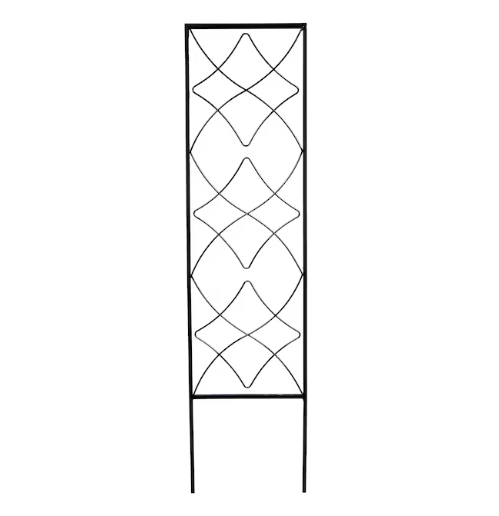
Style Selections 12-in W x 48-in H Black Steel Swirl Garden Trellis For Climbing Plants For Roses
- Sturdy steel constructed trellis measures 48-in high x 12-in wide
- Easily stakes into soil, a large container or decorative planter pot
- Powder coated finish withstands the elements to resist rust
- Ideal for clematis, morning glory and other climbers
- Give your climbing plants a stately and sturdy trellis to climb
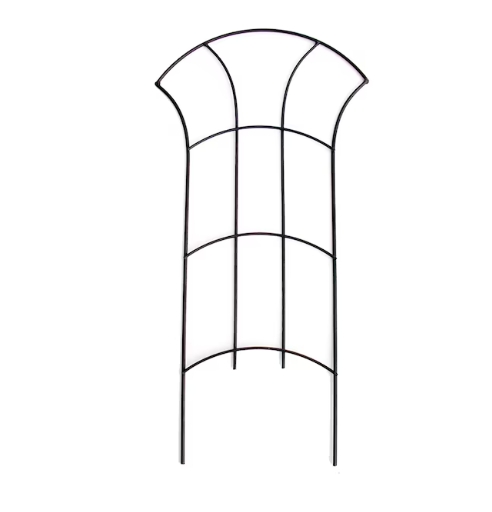
Style Selections 12-in W x 24-in H Black Steel Garden Trellis For Climbing Plants For Cucumbers For Roses
- Durable steel construction
- Powder-coated finish
- Great for potted vegetables
- Fits in small gardens easily

Style Selections 24-in W x 78-in H Black Steel Garden Trellis For Climbing Plants
- 78-In high x 24-in wide mission style trellis
- Constructed with square steel tubing and flat stamped steel
- Steel is welded to give the trellis strength and stability
- Features a powder coating for added rust resistance
- Creates a stately support for climbing vine plants
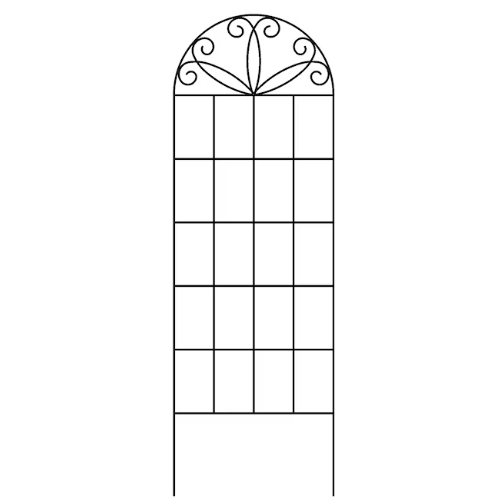
Style Selections 20-in W x 60-in H Black Steel Scroll Garden Trellis For Climbing Plants For Roses
- Garden trellis is 60 in high x 20 in wide
- Sturdy steel construction with easy to insert leg stakes
- Powder coated finish withstands the elements to resist rust
- Gives your climbing plants a decorative and sturdy trellis to climb

Style Selections 24.02-in W x 72.05-in H Brown wood Garden Trellis For Climbing Plants
- 100% Wood
- Help promote the growth of climbing plants
- Can be used in privacy, decorative, and functional applications
- Weather resistant
Transform Your Outdoor Oasis with Versatile Garden Architecture
There’s something magical about the way climbing plants transform a garden. The vertical dance of vines, the cascade of flowers, the architectural interest created by nature’s own design – all of these elements elevate an ordinary garden into something extraordinary. At the heart of this transformation lies a simple yet powerful garden structure: the trellis. And when it comes to blending form, function, and affordability, Style Selections trellises stand out as the perfect choice for gardeners of all experience levels.
As someone who has spent countless hours nurturing garden spaces both modest and expansive, I’ve come to appreciate how the right structural elements can completely transform an outdoor area. Whether you’re looking to create a living privacy screen, showcase your prized climbing roses, or simply add vertical interest to a small patio garden, the humble trellis offers endless possibilities. Let’s explore why Style Selections trellises have become increasingly popular among garden enthusiasts and how they might be the perfect addition to your own outdoor sanctuary.
What Exactly Is a Style Selections Trellis?
Style Selections is a home improvement brand carried by Lowe’s that offers a range of garden structures including their popular trellises. These garden accessories are essentially frameworks designed to support climbing plants. But Style Selections trellises are more than just functional plant supports—they’re decorative elements that enhance your garden aesthetic even before the first vine begins its upward journey.
What distinguishes Style Selections trellises from generic options is their thoughtful design. These trellises feature lattice patterns that provide both structural support for plants and visual appeal for your garden space. The geometric patterns—typically diamond or square lattice configurations—create an elegant backdrop for your climbing plants while ensuring they have plenty of places to grip and climb.
The brand offers various styles ranging from simple flat panels to more elaborate arched designs and even obelisk shapes for container gardens. This variety allows you to select options that complement your existing garden design rather than settling for a one-size-fits-all approach.
While primarily designed as plant supports, these trellises can also serve as standalone decorative elements or dividers in garden spaces. Even without plants, their architectural presence adds depth and visual interest to otherwise plain walls or empty garden corners.
Where to Purchase Style Selections Trellises
As a proprietary brand of Lowe’s Home Improvement, Style Selections trellises are most readily available at Lowe’s retail locations throughout the United States. This exclusivity offers both advantages and limitations for potential buyers.
The benefit of shopping at Lowe’s is the ability to physically examine the trellises before purchase. You can assess the construction quality, visualize the size in relation to your garden space, and even compare different Style Selections models side by side. The in-person shopping experience is particularly valuable for gardening accessories like trellises, where dimensions and design details significantly impact their suitability for specific garden applications.
For those who prefer online shopping, Lowe’s website (Lowes.com) offers the complete range of Style Selections trellises. The online platform includes detailed product specifications, customer reviews, and often more variety than might be available in physical stores. Many locations offer convenient options like buy online, pick up in store, or home delivery for larger trellis models.
Occasionally, you might find Style Selections trellises on third-party marketplaces or through resellers, though prices may be higher than purchasing directly from Lowe’s. For the most current selection and competitive pricing, shopping directly through Lowe’s—either in-store or online—typically provides the best value.
The Cost Factor: Style Selections Trellis Pricing
One of the most compelling aspects of Style Selections trellises is their accessibility across different budget ranges. These garden structures typically range from approximately $20 for simpler, smaller designs to around $100 for larger, more elaborate models.
The entry-level options, usually priced between $20-40, include basic flat panel trellises ideal for small climbing plants or modest garden spaces. These affordable models still maintain the characteristic Style Selections quality but with simpler designs and sometimes lighter-weight materials.
Mid-range options, generally priced between $40-70, offer enhanced features like thicker construction, weather-resistant coatings, and more decorative lattice patterns. These trellises strike an excellent balance between durability and affordability, making them popular choices for most home gardeners.
Premium Style Selections trellises, typically priced between $70-100, feature the most substantial construction, often including architectural elements like arches, gates, or obelisk designs. These higher-end models serve as focal points in garden design rather than mere plant supports.
It’s worth noting that Lowe’s frequently includes Style Selections products in their seasonal sales, particularly during spring and early summer. Patient shoppers can often find significant discounts—sometimes 20-30% off regular prices—during these promotional periods.
When evaluating the cost, consider that a quality trellis is an investment that should last multiple growing seasons. The affordability of Style Selections trellises, especially when compared to custom-built alternatives that might cost hundreds of dollars, makes them an attractive option for gardeners seeking value without compromising on design.
Materials: What Goes Into a Style Selections Trellis?
The materials used in Style Selections trellises vary depending on the specific model, offering options to suit different garden environments and aesthetic preferences. Understanding these material choices helps when selecting the right trellis for your particular needs.
The most common material used in Style Selections trellises is powder-coated steel. This construction offers several advantages: significant strength-to-weight ratio, resistance to rust when properly maintained, and a sleek appearance that complements most garden styles. The powder coating—typically in black, white, or dark green—provides an additional layer of weather protection while creating a finished look.
For gardeners seeking more natural aesthetics, Style Selections also offers wood trellises, typically constructed from weather-resistant cedar or treated pine. These wooden options develop a beautiful patina over time and blend harmoniously with traditional garden designs. The wood versions tend to be heavier than their metal counterparts but offer a warmth that metal cannot replicate.
Some premium Style Selections models feature combination materials—for instance, a metal frame with wooden lattice inserts—creating a hybrid design that maximizes the benefits of both materials. These combination trellises often command higher prices but provide distinctive visual appeal.
Plastic or resin trellises are also available in the Style Selections line, particularly for smaller applications or container gardens. While these lightweight options lack the heft of metal or wood, they offer exceptional weather resistance and require virtually no maintenance—appealing features for casual gardeners or those in harsh climate zones.
Regardless of the material, Style Selections trellises incorporate UV inhibitors and weather-resistant features to extend their usable lifespan. The quality of hardware and connecting elements also influences durability—features worth examining closely when comparing different models.
Weather Resistance: Will Your Trellis Stand the Test of Time?
Garden structures face continuous exposure to the elements, making weather resistance a critical consideration for any trellis purchase. Style Selections trellises are designed with this environmental challenge in mind, though their specific weather resistance varies by material and construction method.
The powder-coated steel models offer excellent resistance to moisture, preventing rust and corrosion that would otherwise compromise structural integrity. This coating also provides UV protection, preventing color fading even after several seasons of sun exposure. However, it’s worth noting that scratches or chips in the powder coating can create vulnerability points where rust might eventually develop, particularly in coastal areas with salt-laden air.
Wooden Style Selections trellises utilize materials selected for their natural weather resistance, such as cedar, or woods treated to withstand moisture. These wooden options generally handle temperature fluctuations better than metal alternatives, neither becoming uncomfortably hot in summer sun nor brittle in winter cold. However, even weather-resistant woods will eventually weather without periodic maintenance.
The plastic and resin options in the Style Selections line offer perhaps the greatest weather resistance, impervious to rust and rot. These synthetic materials can withstand rain, snow, and intense sunlight without degradation, though they may lack the strength to support heavier climbing plants in windy conditions.
Most Style Selections trellises are designed to withstand normal weather conditions, including moderate rain, wind, and sun exposure. However, in extreme weather events like hurricanes or heavy snow loads, even the most robust trellises may require temporary reinforcement or removal for safekeeping.
For extended lifespan, particularly in challenging climates, seasonal maintenance significantly improves weather resistance. This might include touching up any damaged coating on metal trellises, applying wood preservative to wooden models, or simply cleaning accumulated debris that could trap moisture against the structure.
Size Options: Finding the Perfect Fit
Garden spaces come in all dimensions, and Style Selections accommodates this reality by offering trellises in various sizes to suit different applications. This range allows gardeners to select options proportionate to their space and appropriate for their intended climbing plants.
Standard flat panel trellises typically range from 2 to 8 feet in height, with widths varying from 1 to 4 feet. These rectangular panels work well against walls, fences, or as freestanding dividers in garden beds. The smaller panels (2-4 feet) work perfectly for container gardens or small climbing plants like clematis, while larger panels (6-8 feet) provide adequate support for vigorous climbers like morning glories or grape vines.
For gardeners seeking to create dramatic garden features, Style Selections offers arched trellis designs. These typically stand 7-8 feet tall at their highest point, with widths ranging from 3-5 feet. Arched trellises create natural garden entryways or focal points, particularly beautiful when adorned with flowering vines.
Obelisk or tower trellises, designed primarily for container gardens, usually stand 4-6 feet tall with a square or triangular footprint of approximately 1-2 feet. These three-dimensional structures provide excellent support for potted climbing plants, creating vertical interest on patios or in small garden spaces where ground planting isn’t feasible.
When selecting a trellis size, consider not just your current garden dimensions but the mature size of your intended climbing plants. Vigorous growers like wisteria or some climbing roses may quickly outgrow smaller trellises, creating maintenance challenges. Conversely, a massive trellis might overwhelm delicate climbers like sweet peas or dwarf morning glories.
It’s also worth considering visual proportions—a trellis should complement rather than dominate its surroundings unless intended as a major focal point. In most residential gardens, trellises that are 6 feet or shorter maintain human scale and integrate harmoniously with other landscape elements.
Installation Guide: Setting Up Your Style Selections Trellis in the Garden
Installing a Style Selections trellis properly ensures both its stability and longevity. While specific installation methods vary depending on the trellis design and your garden situation, the following general guidelines apply to most ground installations.
Before beginning installation, gather the necessary tools: a tape measure, level, garden stakes, hammer or mallet, and appropriate digging tools. For some installations, you might also need concrete mix for securing posts.
Start by determining the ideal location for your trellis, considering sun exposure for your climbing plants (most require at least 6 hours of direct sunlight) and the visual impact on your garden design. Mark the location with garden stakes and string to visualize the placement before making permanent changes.
For panel-style trellises installed directly in the ground, dig holes approximately 12-18 inches deep for the trellis legs or supporting posts. The depth may vary depending on your soil type and climate conditions—regions with freeze-thaw cycles typically require deeper installations to prevent frost heave.
Position the trellis in the prepared holes, checking for level both vertically and horizontally. This precision ensures the trellis will support plant growth evenly and maintain its visual appeal. For additional stability, especially in windy areas, consider setting the legs in quick-setting concrete.
Backfill the holes with soil, tamping firmly around the legs to eliminate air pockets that could cause settling. Water thoroughly to help the soil settle and provide initial stability. If your trellis seems unstable after initial installation, temporary supports like garden stakes can provide reinforcement until the soil fully settles.
For smaller trellises or those used in container gardens, many Style Selections models include spikes or extensions designed to anchor securely in potting soil. Insert these deeply into the container, ensuring they reach at least halfway down the pot for adequate stability.
Some gardeners find that installing the trellis before planting climbing specimens yields better results, as it minimizes root disturbance. However, for established plants, careful installation is still possible with attention to root systems during the digging process.
Wall Mounting: Can Style Selections Trellises Be Attached to Structures?
Many garden spaces benefit from wall-mounted trellises, which maximize growing area in limited spaces and create living green walls against houses, fences, or garden walls. Style Selections offers several trellis models specifically designed for wall mounting, with features that facilitate secure attachment to vertical surfaces.
Before mounting any trellis to a structure, verify that your wall material can support both the trellis weight and the eventual weight of mature climbing plants, which can be substantial for woody vines like wisteria or climbing roses. Brick, stone, and solid wood surfaces typically provide excellent mounting surfaces, while vinyl siding or stucco may require special considerations.
Most wall-mountable Style Selections trellises include pre-drilled holes or brackets designed for attachment. However, these standard hardware points may not align perfectly with studs or solid attachment points in your wall. In such cases, adding additional mounting brackets or extending the existing ones ensures secure attachment.
For masonry walls (brick, stone, or concrete), use masonry anchors appropriate for the wall material. These specialized fasteners expand within drilled holes to create secure attachment points. Always use corrosion-resistant hardware—stainless steel or hot-dipped galvanized—to prevent unsightly rust stains on your wall.
On wooden structures, locate studs or solid framing members for the most secure attachment. Deck screws or lag bolts of appropriate length (typically 2-3 inches) provide excellent holding power. Pre-drilling pilot holes prevents wood splitting and facilitates easier installation.
Consider installing standoffs—spacers that create distance between the trellis and wall surface—particularly when mounting to house walls. This gap, ideally 2-3 inches, allows for air circulation behind the trellis, preventing moisture damage to the wall and facilitating easier maintenance of both the trellis and the wall surface.
For heavier trellises or those supporting substantial vines, installing a horizontal mounting board first creates a solid attachment surface. This board can be securely fastened to multiple studs or structural elements, then the trellis attached to this mounting board.
Hardware Inclusions: What Comes in the Box?
When purchasing a Style Selections trellis, understanding what hardware is included helps determine what additional supplies you might need for proper installation. The package contents vary by model, but most Style Selections trellises include basic assembly hardware.
For freestanding trellises, the package typically includes all necessary screws, bolts, or connectors required to assemble the trellis itself. These components are generally sized appropriately for the specific model and pre-finished to match the trellis color. Assembly instructions with diagrams guide you through the construction process, which typically requires only basic tools like screwdrivers or adjustable wrenches.
Wall-mountable trellises usually include some basic mounting hardware, often in the form of screws and plastic wall anchors. However, these included anchors may not be appropriate for all wall types. For masonry walls or heavy-duty applications, you’ll likely need to purchase specialized anchors separately. Similarly, standoff spacers for creating air gaps between trellis and wall are rarely included and must be purchased separately if desired.
Ground-installation hardware varies significantly between models. Some include ground spikes or extensions for soil insertion, while others are designed to be set directly into the ground without additional hardware. Concrete, if needed for installation stability, is never included and must be purchased separately.
The packaging typically includes warranty information and maintenance guidelines specific to your trellis model. These documents are worth retaining for future reference, particularly if your trellis requires seasonal maintenance or if warranty issues arise.
If your Style Selections trellis requires assembly, the package usually includes a parts inventory list. Before beginning assembly, verify that all listed components are present to avoid frustration midway through the process. Missing parts can typically be replaced by contacting Lowe’s customer service with your purchase information.
Plant Selection: What Grows Best on a Style Selections Trellis?
Selecting appropriate plants for your trellis enhances both its function and beauty. Style Selections trellises support various climbing plants, but matching plant characteristics to trellis design ensures the best results.
Annual climbing plants offer immediate gratification, covering your trellis in a single growing season. Morning glories (Ipomoea), with their trumpet-shaped flowers in vibrant blues, purples, and pinks, grow quickly and vigorously on most trellis styles. Black-eyed Susan vine (Thunbergia alata) produces charming yellow or orange flowers with dark centers and has a more restrained growth habit suitable for smaller trellises. Annual sweet peas (Lathyrus odoratus) contribute delightful fragrance along with their colorful blooms, though they prefer cooler conditions and may struggle in hot summer regions.
For perennial options that return year after year, clematis varieties offer exceptional diversity in flower size, color, and blooming season. These adaptable climbers work well on almost any Style Selections trellis and can be selected for spring, summer, or fall flowering. Climbing roses, particularly rambling varieties, create spectacular floral displays but require sturdy trellises—the larger Style Selections models with reinforced construction are ideal for these substantial plants. Honeysuckle (Lonicera) combines fragrant flowers with attractive foliage and adapts well to most trellis designs.
Flowering vines aren’t the only option—many edible plants thrive on trellises. Cucumber, pole beans, and peas all benefit from vertical support, making efficient use of garden space while improving air circulation around the plants. Compact grape varieties can be trained on larger Style Selections trellises, though the substantial weight of mature grape vines requires the sturdiest models.
When selecting climbing plants, consider their attachment method. Some plants, like ivy and Virginia creeper, attach directly to surfaces with adhesive discs or aerial roots—these may not be ideal for wooden trellises as they can damage the material over time. Twining vines like wisteria, honeysuckle, and morning glory wrap their stems around supports. Scramblers like climbing roses and bougainvillea have stiff stems that need to be tied to the trellis initially until they establish.
Also consider growth rate—extremely vigorous climbers like wisteria may quickly overwhelm smaller trellises and require frequent pruning to maintain appropriate scale. Conversely, slow-growing climbers like certain clematis varieties might leave a large trellis looking sparse for several seasons.
Indoor Applications: Using Style Selections Trellises Inside Your Home
While primarily designed for garden use, many Style Selections trellises adapt beautifully to indoor applications, bringing garden structure and living elements into interior spaces. The versatility of these trellises extends beyond outdoor gardening into creative indoor uses.
For houseplant enthusiasts, smaller Style Selections trellises provide elegant support for indoor climbing plants. Pothos (Epipremnum aureum), philodendron varieties, and hoya plants naturally climb in their native environments and flourish when given trellis support indoors. The visual transformation from trailing plant to vertical climber dramatically changes the plant’s appearance and often promotes healthier growth patterns.
In sunrooms or spaces with adequate natural light, flowering climbers like jasmine (Jasminum polyanthum) or passion flower (Passiflora) can be trained on indoor trellises, bringing their spectacular blooms and sometimes fragrance into living spaces. These flowering climbers often perform better with the structured support that trellises provide compared to traditional hanging baskets.
Beyond plant support, Style Selections trellises serve decorative functions in interior design. Smaller trellises can function as unique room dividers, creating visual separation without blocking light or air flow. In bedrooms, a trellis headboard creates architectural interest and can be left plain or adorned with artificial vines for a garden-inspired aesthetic.
When selecting a Style Selections trellis for indoor use, consider scale carefully—indoor spaces typically call for smaller, more delicate designs than outdoor applications. The material choice also impacts interior compatibility; wooden trellises often integrate more harmoniously with indoor furnishings than metal versions, though both have their place depending on your interior style.
For indoor plant applications, ensure your chosen trellis fits comfortably in the plant container without destabilizing it. Some gardeners secure the trellis to the container with discreet wire or decorative rope for additional stability, particularly important for top-heavy arrangements.
Maintenance requirements differ for indoor trellises—they need protection from excess moisture (particularly wooden trellises) but don’t face the same weather challenges as their outdoor counterparts. Regular dusting and occasional cleaning with mild soap keeps them looking their best, particularly in kitchens where cooking residues might accumulate.
Maintenance Tips: Keeping Your Trellis Looking Great
Proper maintenance extends the life of your Style Selections trellis and preserves its appearance through multiple growing seasons. While these trellises are designed for durability, some routine care significantly enhances their longevity.
For metal Style Selections trellises, inspect annually for any damage to the protective coating. Small chips or scratches in powder-coated finishes should be touched up promptly with matching paint to prevent rust from developing at these vulnerable points. Most hardware stores can match the standard colors used by Style Selections. Additionally, check all connection points and hardware for signs of loosening or corrosion, tightening or replacing components as needed.
Wooden trellises require more regular maintenance to preserve their structural integrity. Apply a water-repellent wood preservative annually, ideally during dry weather when the wood can thoroughly absorb the treatment. Clear any accumulated debris from lattice intersections where moisture might otherwise become trapped. Watch for signs of wood rot, particularly at ground level or where the trellis contacts walls, replacing affected sections before structural compromise occurs.
Cleaning your trellis should be done carefully, especially when plants are actively growing on it. For routine cleaning, a garden hose with moderate pressure removes most dirt and debris. For more thorough cleaning, a solution of mild dish soap and water applied with a soft brush effectively removes algae, bird droppings, and other stubborn residues without damaging either the trellis or climbing plants.
Winter preparation varies by climate and trellis material. In regions with harsh winters, wooden trellises benefit from additional waterproofing before cold weather arrives. Metal trellises in snow-prone areas should be cleared of heavy snow accumulation to prevent bending or structural damage. For delicate designs or in extreme weather regions, some gardeners choose to remove smaller trellises entirely during winter months, storing them in protected locations.
Plants themselves can contribute to trellis wear if not properly managed. Extremely vigorous climbers may stress trellis structures, particularly at connection points. Regular pruning not only keeps plants in scale with their support but also reduces weight strain on the trellis. Similarly, promptly removing seasonal climbers at the end of their growing cycle prevents unnecessary winter weight on the structure.
Customer Reviews: What Others Say About Style Selections Trellises
The real-world performance of Style Selections trellises is best reflected in customer experiences. Reviewing feedback from other gardeners provides valuable insights into strengths and potential limitations of these garden structures.
Positive reviews consistently highlight the value proposition of Style Selections trellises. Many customers appreciate the combination of attractive design and affordable pricing, noting that these trellises offer visual appeal comparable to much more expensive options. The variety of available designs also receives frequent praise, allowing customers to find styles that complement their specific garden aesthetic.
Ease of assembly features prominently in favorable reviews, with many customers reporting straightforward installation even without specialized tools or skills. The clear instructions and pre-drilled holes in most models contribute to this positive assembly experience. This accessibility makes Style Selections trellises particularly popular among beginning gardeners or those with limited DIY experience.
Durability experiences vary somewhat by model and material. Metal trellises generally receive strong marks for withstanding weather conditions, though some customers in coastal or particularly harsh environments report accelerated wear. Wooden trellises earn praise for their natural appearance but generate mixed reviews regarding longevity, with maintenance practices significantly influencing performance.
Critical reviews most frequently mention issues with stability in very windy conditions, particularly for taller freestanding models. Some customers recommend additional anchoring methods beyond what’s included with the trellis. Others note that the included mounting hardware for wall-mounted models sometimes feels inadequate for the task, necessitating upgrades for complete peace of mind.
Plant support functionality—the primary purpose of any trellis—receives overwhelmingly positive feedback. Gardeners growing everything from delicate annual vines to substantial perennial climbers report that Style Selections trellises provide appropriate support without damaging plant stems. The lattice spacing on most models accommodates various climbing mechanisms, from twining vines to plants needing tie supports.
For specific applications, customer experiences offer valuable guidance. Those using trellises for privacy screening mention that while the structures themselves create minimal visual barriers, fast-growing annual vines can create effective seasonal privacy within 4-6 weeks of planting. Customers using trellises for edible gardens particularly appreciate the food-safe materials used in construction, allowing worry-free harvesting of crops like beans, peas, and cucumbers.
Design Diversity: Colors and Styles in the Selection
Style Selections trellises offer significant aesthetic variety, allowing gardeners to select options that complement their landscape design vision. This design diversity extends to both structural forms and finish options.
Color options, while not unlimited, cover the most versatile garden palette. Classic black remains the most popular finish for metal trellises, offering a sophisticated backdrop that recedes visually while highlighting the plants growing on it. White trellises create a more prominent architectural statement and complement cottage garden aesthetics particularly well. Antique or bronze finishes provide warmth that bridges the gap between the coolness of black and the starkness of white. For wooden trellises, natural cedar tones predominate, though some models feature white or green painted finishes.
Beyond color, the structural design varies significantly across the Style Selections line. Traditional flat panel trellises with diamond lattice patterns offer timeless appeal and maximum versatility. Fan-shaped trellises, which widen from bottom to top, create dramatic visual effects when placed against walls. Arch trellises transform garden pathways into enchanting walkways while providing substantial support for climbing plants. Obelisk or tower designs bring three-dimensional interest to container gardens or serve as sculptural elements within garden beds.
Decorative elements distinguish many Style Selections trellises from purely functional alternatives. Scrollwork details, finials, and decorative tops add personality without compromising plant support functionality. These embellishments particularly enhance the trellis’s visual appeal during winter months or early in the growing season before plants have covered the structure.
Some Style Selections trellises incorporate multiple design elements, such as combination trellis-bench features or trellis-planter integrated designs. These multifunctional pieces maximize utility in limited garden spaces while maintaining aesthetic cohesion.
For custom applications, some gardeners combine multiple Style Selections trellises to create more complex structures. Adjacent flat panels can form corner configurations, while strategically placed arch trellises create room-like garden spaces. This modularity allows for creative expression beyond the individual trellis designs.
When selecting among these varied designs, consider both your immediate visual preferences and the long-term interaction between trellis and plants. Some elaborately decorated trellises may eventually become completely obscured by vigorous climbers, making their decorative elements a temporary rather than permanent feature of your garden design.
Privacy Solutions: Using Trellises as Screens
One of the most practical applications for Style Selections trellises is creating green privacy screens. These living barriers offer advantages over traditional fencing: they’re typically less expensive, often exempt from height restrictions that govern solid fences, and bring living beauty to boundary areas.
For effective privacy screening, selecting the right trellis configuration is crucial. Taller models, particularly those 6-8 feet in height, provide meaningful visual barriers when covered with appropriate plants. Panel trellises installed in series create continuous screening along property lines or around patios. For maximum coverage, overlap adjacent panels slightly rather than placing them end to end, eliminating gaps that compromise privacy.
Plant selection dramatically influences privacy effectiveness. Evergreen climbers like star jasmine (Trachelospermum jasminoides) or certain clematis varieties (like Clematis armandii) provide year-round screening in milder climates. In colder regions where evergreen climbers may struggle, deciduous options with dense growth habits—such as hops (Humulus lupulus) or kiwi vine (Actinidia)—offer seasonal privacy during the growing months when outdoor spaces see heaviest use.
Annual vines offer quick privacy solutions, often covering substantial trellis areas within a single growing season. Morning glories, hyacinth bean (Lablab purpureus), and black-eyed Susan vine grow rapidly and create dense foliage coverage. For temporary screening needs or in rental properties where permanent installations aren’t feasible, container-grown annual vines on freestanding trellises provide mobile privacy solutions.
Installation strategies enhance privacy effectiveness. Placing trellises slightly offset from sitting areas rather than directly at boundaries creates depth perception that increases the psychological sense of privacy. For multi-level properties, strategic placement on elevated areas maximizes the effective height of privacy screens without requiring taller trellises.
While extremely effective for visual privacy, trellis screens offer limited sound dampening compared to solid structures. For areas where noise reduction is as important as visual screening, consider installing trellises in front of solid fencing, gaining both sound attenuation and the aesthetic benefits of climbing plants.
Maintenance requirements increase somewhat when trellises serve as privacy screens. The dense plant growth necessary for effective screening requires regular pruning to maintain appropriate scale and prevent overgrowth that might damage the supporting structure. This ongoing commitment should factor into your decision to use trellises for privacy applications.
Wind Resistance: Performance in Challenging Conditions
Garden structures face few challenges more demanding than strong winds. The performance of Style Selections trellises in windy conditions depends on several factors including design, installation method, and maintenance practices.
Flat panel trellises, particularly taller models, present broad surfaces that catch wind like sails. This design vulnerability requires mitigation through proper installation. For freestanding applications in windy areas, setting trellis legs in concrete rather than soil alone significantly improves stability. The depth of installation also influences wind resistance—extending legs 18-24 inches into the ground provides substantially more stability than shallower installations.
Arched trellises generally demonstrate better inherent wind resistance than flat panels due to their curved design, which allows some air movement through the arch while dispersing wind forces. Obelisk or tower designs, with their three-dimensional structure, typically offer the greatest stability in windy conditions, particularly when properly anchored in containers or ground soil.
Wall-mounted trellises benefit from the structural support of their backing surface but require proper attachment to withstand wind loads. In windy regions, increase both the number and quality of mounting points beyond the minimum recommendations. Using larger diameter, longer fasteners appropriate for your wall material creates more secure attachments that resist the leverage effect of wind against the trellis surface.
The plants growing on your trellis significantly impact wind performance. Dense, continuous plant coverage increases wind resistance by creating a solid surface where forces can act. Training plants to distribute evenly across the trellis surface rather than concentrating growth at the top helps balance wind loads. During extreme weather events, temporary support systems—like additional stakes or guy wires—can provide emergency reinforcement for valuable plants and trellises.
Seasonal considerations affect wind vulnerability. Winter often brings the strongest winds precisely when deciduous plants have shed their leaves, reducing the wind-catching surface. However, this coincides with potentially frozen ground that may compromise anchoring. In freeze-thaw climate zones, check trellis stability each spring, as frost heave can loosen ground anchoring significantly.
For container applications in windy locations, the weight and stability of the container itself becomes critical. Containers should be at least 1/3 the height of the trellis in diameter and filled with sufficient weight to counterbalance wind forces. Some gardeners add extra weight to container bottoms—river rocks work well—or use double-potting techniques where a decorative outer container houses a lighter growing container plus stabilizing material.
Expandability: Creating Larger Structures
One appealing aspect of Style Selections trellises is their potential for expansion beyond individual units. With thoughtful planning, multiple trellises can create larger, more complex garden structures.
The simplest expansion approach involves installing multiple panel trellises in series to create longer runs. This technique works particularly well for property boundaries or garden dividers. For visual cohesion in these extended installations, maintain consistent spacing between panels and align tops precisely. Some gardeners add connecting elements—decorative finials or plant-supporting crosspieces—between adjacent panels to create a more unified appearance.
For three-dimensional structures, combining different trellis styles creates functional garden rooms or enclosures. Arch trellises serve as entrances, while panel trellises form walls. This approach effectively creates plant-covered outdoor spaces that define areas within larger gardens without the permanence or expense of traditional structures.
Height expansion requires careful structural planning. Simply stacking trellises vertically creates dangerous instability and isn’t recommended. Instead, consider overlapping designs where the lower portion has greater depth and stability, supporting a slightly set-back upper section. This technique creates tall climbing supports while maintaining appropriate structural integrity.
When expanding trellis structures, pay particular attention to anchoring systems. Larger configurations experience greater cumulative wind forces and require proportionately stronger foundations. For substantial expanded structures, professional installation or consultation may be warranted to ensure safety and longevity.
The connectors between expanded trellis elements deserve careful consideration. While zip ties offer quick temporary connections, they degrade in sunlight and create maintenance issues. For permanent installations, use UV-resistant plastic connectors, coated wire, or metal brackets that match the trellis finish. These connections should be designed to allow slight movement without structural compromise—completely rigid connections can lead to stress failure during wind or temperature fluctuations.
Plant selection for expanded trellis structures benefits from thoughtful diversity. Rather than covering the entire structure with a single climbing species, consider combinations that provide visual interest and extended seasonal appeal. Using plants with different growth habits and bloom times creates dynamic living structures that evolve throughout the growing season.
Brand Comparisons: How Style Selections Measures Up
When evaluating Style Selections trellises against competitor offerings, several factors influence their comparative standing in the market. This context helps gardeners determine whether these products represent the best value for their specific needs.
In direct price comparisons, Style Selections trellises typically occupy the mid-range market position. They generally cost more than basic hardware store utility trellises but significantly less than high-end garden center offerings or custom-built structures. This positioning reflects their balance of decorative appeal and functionality without premium pricing.
Material quality varies somewhat across the garden structure market. Style Selections metal trellises use standard gauge steel with quality powder coating, comparable to similarly priced alternatives from brands like Garden Treasures or Panacea Products. The wood used in Style Selections wooden trellises—typically cedar or treated pine—aligns with industry standards for garden structures in this price range, offering reasonable weather resistance without reaching the premium hardwood quality of high-end brands.
Design variety represents a particular strength for Style Selections compared to many competitors. While specialty garden brands might offer more elaborate or unique designs, they do so at substantially higher price points. Within the affordable-to-mid-range market segment, Style Selections offers broader design diversity than most comparable brands.
Availability creates a significant advantage for Style Selections through its Lowe’s distribution network. The nationwide presence of Lowe’s stores makes these trellises more accessible than specialty brands limited to garden centers or online sales. This accessibility extends to replacement parts and warranty service, where the retail store presence simplifies resolution of any product issues.
Warranty protection for Style Selections trellises typically includes standard coverage against manufacturing defects, comparable to most garden structure brands in this price range. Higher-end competitors sometimes offer extended warranty periods but at substantially higher purchase prices, changing the value equation considerably.
Online customer satisfaction metrics show Style Selections trellises receiving comparable ratings to similar products from competitors like Achla Designs or Gardman, with average ratings typically in the 4.0-4.5 star range (out of 5). These satisfaction levels reflect the reasonable consumer expectations at this price point—customers recognize they’re purchasing affordable garden accessories rather than heirloom-quality structures.
For specialized applications, the competitive comparison shifts somewhat. Gardeners seeking maximum durability for supporting extremely vigorous climbers like wisteria might find brands like Gardman or Veradek offer heavier-duty options, albeit at higher prices. Conversely, those seeking lightweight, portable options might prefer the specialized offerings from brands focusing on container gardening accessories.
Weight Capacity: What Can Your Trellis Support?
Understanding the weight capacity of Style Selections trellises helps prevent structural failures and ensures appropriate plant selection. While exact specifications vary by model, general guidelines help match trellises to their intended use.
Standard flat panel Style Selections trellises typically support between 20-40 pounds of plant material when properly installed. This capacity adequately accommodates most annual vines and smaller perennial climbers like clematis or jasmine. The weight distribution significantly impacts performance—evenly distributed growth across the trellis surface utilizes the structure’s strength most effectively.
Arched designs generally offer greater weight capacity, particularly at the base sections where the structure connects to the ground. The arch configuration inherently distributes weight forces more efficiently than flat panels. However, concentrated weight at the top of the arch can create leverage that stresses the entire structure, so training plants to grow evenly across the arch maximizes stability.
Obelisk or tower trellises designed for container use typically support 15-25 pounds of plant material. This reduced capacity reflects their narrower base and the inherent limitations of container stability. For container applications, lightweight annual vines or restrained perennial climbers like mandevilla work best, while avoiding extremely vigorous growers that might quickly exceed weight limitations.
The installation method dramatically influences effective weight capacity. Trellises set in concrete footings might support twice the plant weight of those simply pushed into loose soil. Similarly, wall-mounted trellises properly attached to structural elements (studs or masonry) offer significantly greater support than those attached through drywall into hollow walls.
Beyond static weight considerations, dynamic forces like wind and rain significantly impact trellis performance. Wet foliage adds substantial temporary weight, while wind creates leverage that multiplies the effective stress on trellis structures. In regions prone to these conditions, select trellises with capacity ratings well above your anticipated plant weight to accommodate these environmental factors.
For extremely heavy climbers like established wisteria (which can develop woody stems weighing hundreds of pounds), even the sturdiest Style Selections trellises may prove inadequate without substantial reinforcement. These exceptionally vigorous plants typically require custom-built pergolas or specialized heavy-duty supports rather than decorative trellises.
When evaluating weight capacity for privacy screen applications, remember that complete visual screening requires dense foliage, which correlates with increased weight. For these applications, selecting multiple trellises with overlapping support areas often provides better long-term performance than expecting maximum coverage on individual panels.
Assembly Experience: How User-Friendly Are These Trellises?
The assembly experience significantly influences customer satisfaction with garden structures like trellises. Style Selections trellises are generally designed with DIY assembly in mind, though the complexity varies across different models.
Most Style Selections trellises arrive partially assembled or in flat-packed configuration with pre-drilled holes and all necessary hardware included. The packaging typically protects components adequately during shipping, though occasional reports of bent pieces in metal trellises highlight the importance of careful inspection upon delivery.
Assembly instructions for Style Selections trellises use illustrated diagrams rather than text-heavy directions, making them accessible regardless of language proficiency. These visual guides typically present a step-by-step process that most users find intuitive to follow. The estimated assembly times provided on packaging tend to be reasonably accurate for someone with basic DIY experience—typically ranging from 15-45 minutes depending on the trellis complexity.
The tools required for assembly remain minimal for most models: typically a screwdriver (Phillips head in most cases) and possibly an adjustable wrench for models with bolted connections. This limited tool requirement makes assembly accessible for gardeners without extensive workshop equipment. Some premium models with more complex designs might require additional tools like a rubber mallet for secure connection of pressure-fitted parts.
Connection points represent the most critical aspect of trellis assembly. Style Selections designs typically use either threaded fasteners (screws and bolts) or pressure-fit connections for component joining. The threaded connections generally provide more secure long-term performance but require slightly more assembly time. Pressure-fit connections offer quicker assembly but may require periodic checking and adjustment as the trellis ages.
For multi-person assembly considerations, most smaller Style Selections trellises can be assembled by a single person without assistance. Larger models, particularly arch designs or tall panels, benefit from a second person to hold components in alignment during connection. The packaging or instructions typically indicate when two-person assembly is recommended.
Common assembly challenges reported by customers include occasional misalignment of pre-drilled holes (requiring minor adjustments during assembly) and difficulty distinguishing between similar-looking parts in more complex designs. Having adequate space to lay out all components before beginning assembly helps identify any potential issues before they cause frustration.
Post-assembly adjustments sometimes prove necessary, particularly for ground installation. Most Style Selections trellises allow for minor alignment adjustments after initial assembly, facilitating proper positioning in the garden. This flexibility represents an advantage over rigid one-piece designs that cannot be adjusted to accommodate uneven ground or specific garden layouts.
Bringing It All Together: Making the Right Trellis Choice
After exploring the multifaceted world of Style Selections trellises, the final consideration involves matching these garden structures to your specific needs and environment. The ideal trellis balances aesthetic appeal, functional requirements, and practical considerations like budget and maintenance capacity.
Begin your selection process by clearly defining your primary purpose. Privacy screening requires different trellis characteristics than showcasing ornamental climbing roses. Supporting vegetable crops demands different considerations than creating decorative garden dividers. This purpose clarity narrows your options and focuses decision-making on truly relevant features.
Your garden’s environmental conditions significantly influence appropriate trellis selection. Coastal gardens with salt-laden air and strong winds might prioritize corrosion-resistant materials and wind-stable designs. Hot, sunny locations benefit from trellises that won’t become uncomfortably hot to touch during summer maintenance. Cold-winter regions require materials that withstand freeze-thaw cycles without degradation.
The architectural context surrounding your garden should inform trellis style selection. Contemporary homes generally pair better with clean-lined, minimalist trellis designs, while traditional architecture harmonizes with more ornate, classical trellis patterns. This context-appropriate selection creates visual cohesion between your home and garden elements.
Consider the complete lifecycle of both trellis and plants in your planning. Will today’s charming annual vine become tomorrow’s maintenance challenge if it self-seeds prolifically? Does your trellis design accommodate the mature size of long-lived perennial climbers? Anticipating these long-term interactions prevents future garden disappointments.
Practical installation considerations deserve careful attention. Ensure your selected location provides appropriate sun exposure for intended plants, access for maintenance, and visibility from preferred viewing areas. Verify soil conditions support secure anchoring or plan for container installation if ground conditions prove challenging.
For most gardeners, Style Selections trellises offer an appealing balance of quality, design, and affordability. Their widespread availability through Lowe’s provides convenient access for initial purchase and any future expansion or replacement needs. This accessibility, combined with their reasonable price points, makes them particularly suitable for gardeners developing their outdoor spaces incrementally over multiple seasons.
Remember that trellises, like all garden elements, evolve over time. The bare structure that seems so prominent during installation gradually becomes a supporting element as plants mature. The most successful trellis selections provide this support both literally and figuratively—enhancing your garden’s beauty while allowing the living elements to take center stage in your outdoor sanctuary.